
Quick answer: which shoes work on turf
| Shoe type | Sole | On artificial turf | Verdict |
|---|---|---|---|
| TF (turf) | Many small rubber studs | Good grip, low stress on joints | Best for most turfs |
| AG (artificial ground) | Shorter, more numerous studs | Built for longer synthetic grass | Fine where the venue allows |
| FG (firm ground) | Longer moulded studs | Can stick in the turf and wear it out | Often not allowed |
| SG (soft ground) | Metal or screw-in studs | Damages turf, risky for others | Almost always banned |
| Running shoes | Smooth, cushioned | Slips when you turn | Avoid for football |
| Indoor court shoes | Flat, non-marking gum rubber | Slippery on grass, great on courts | Use for courts, not turf |
Why TF turf shoes suit most turfs
Most turfs used for 5, 6 and 7-a-side football have short synthetic grass with rubber infill. A TF sole spreads your weight across dozens of small studs, so you get grip on the surface without your foot locking into it. When you twist, your foot moves with you instead of staying planted, which is easier on your knees and ankles.
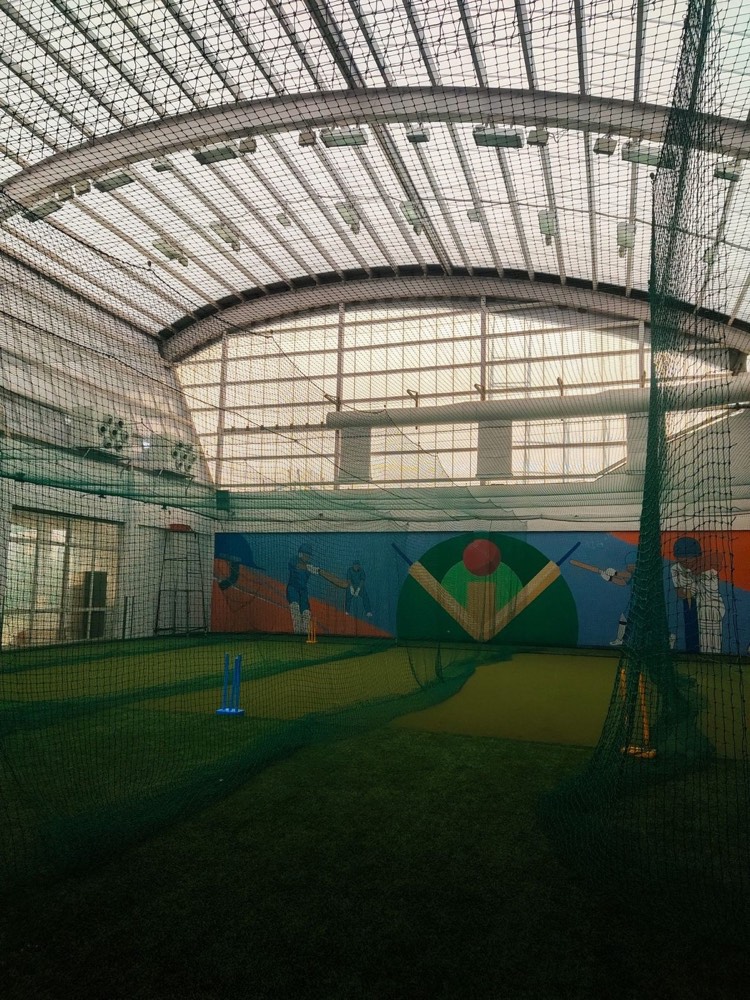
TF shoes also work on box cricket floors, older hard-wearing turfs and even outdoor concrete in a pinch, which makes them the most useful single pair if you play more than one sport.
Can you wear FG or AG studs on artificial turf?
FG studs are longer and designed to sink into natural grass. On artificial turf they can grip too well. Your foot plants while your body keeps turning, and that is how ankle and knee injuries happen. They also pull at the fibres and infill, which is why many venues do not allow them.
AG boots sit in between. They have shorter, hollow or more numerous studs built for longer synthetic grass. Some turfs are fine with them and some are not. If you are not sure, carry a pair of TF shoes and ask at the desk.
Metal or screw-in SG studs are a no on almost every turf. They damage the surface and are dangerous in a crowded small-sided game.
Why running shoes are a bad idea on turf
Running shoes are built to move forward in a straight line. Football is all stops, turns and sideways steps. The smooth, soft sole slides on turf, and the tall cushioned heel makes it easier to roll an ankle. They are fine for a warm-up jog, but swap them before the game starts.
Why venues care about your shoes
- Safety. Long or metal studs hurt people in tackles and in crowded goalmouths.
- Surface life. The wrong studs tear fibres and kick out infill, so the turf wears faster and plays worse for everyone.
- Fairness. One player in long studs changes the game for nine others in turf shoes.
- Courts. Black or marking soles leave streaks on indoor courts, which is why badminton and pickleball venues ask for non-marking shoes.
If a venue turns you away for your shoes, it is not personal. Check the rules on the venue's page or ask before you go.
What shoes to wear for each sport
| Sport | Best shoe | Notes |
|---|---|---|
| Turf football | TF turf shoes | AG only if the venue allows it |
| Box cricket | TF turf shoes or court shoes | Depends on the floor, so check first |
| Badminton | Indoor court shoes | Non-marking soles, good side support |
| Pickleball | Court shoes | Indoor or outdoor court shoes for the surface |
| Basketball | Basketball shoes | Ankle support helps on hard courts |
| Tennis | Tennis shoes for the surface | Clay courts suit a herringbone sole |
How to choose and look after turf shoes
- Try them on with the socks you play in. Your toes should not hit the front when you stop hard.
- Look for a firm heel and a sole that bends at the ball of your foot, not in the middle.
- Shake out the rubber infill after every game so it does not wear the lining.
- Air them out instead of drying them in direct sun, which can crack the sole.
- Replace them when the small studs are worn flat. Bald turf shoes slip just like running shoes.
Ready to play? Browse slots on the football turf booking page, or read how to book a turf for a checklist that covers shoes, lights and changing rooms.
Questions people ask
Q1What are TF shoes?
TF stands for turf. They have a flat rubber sole with many small studs, built for short artificial grass and hard surfaces. They are the safest general choice for turf football.
Q2Can I wear football boots with studs on turf?
It depends on the boot and the venue. Long FG studs and metal studs are often not allowed. AG boots are allowed at some turfs. TF shoes are accepted almost everywhere.
Q3Can I play turf football in running shoes?
You can, but you will slip when you turn and your ankles get less support. For regular games, a pair of TF shoes is worth it.
Q4Do I need different shoes for badminton and pickleball?
Yes. Use indoor court shoes with non-marking soles. They grip the court floor and give side support that turf shoes and running shoes do not.